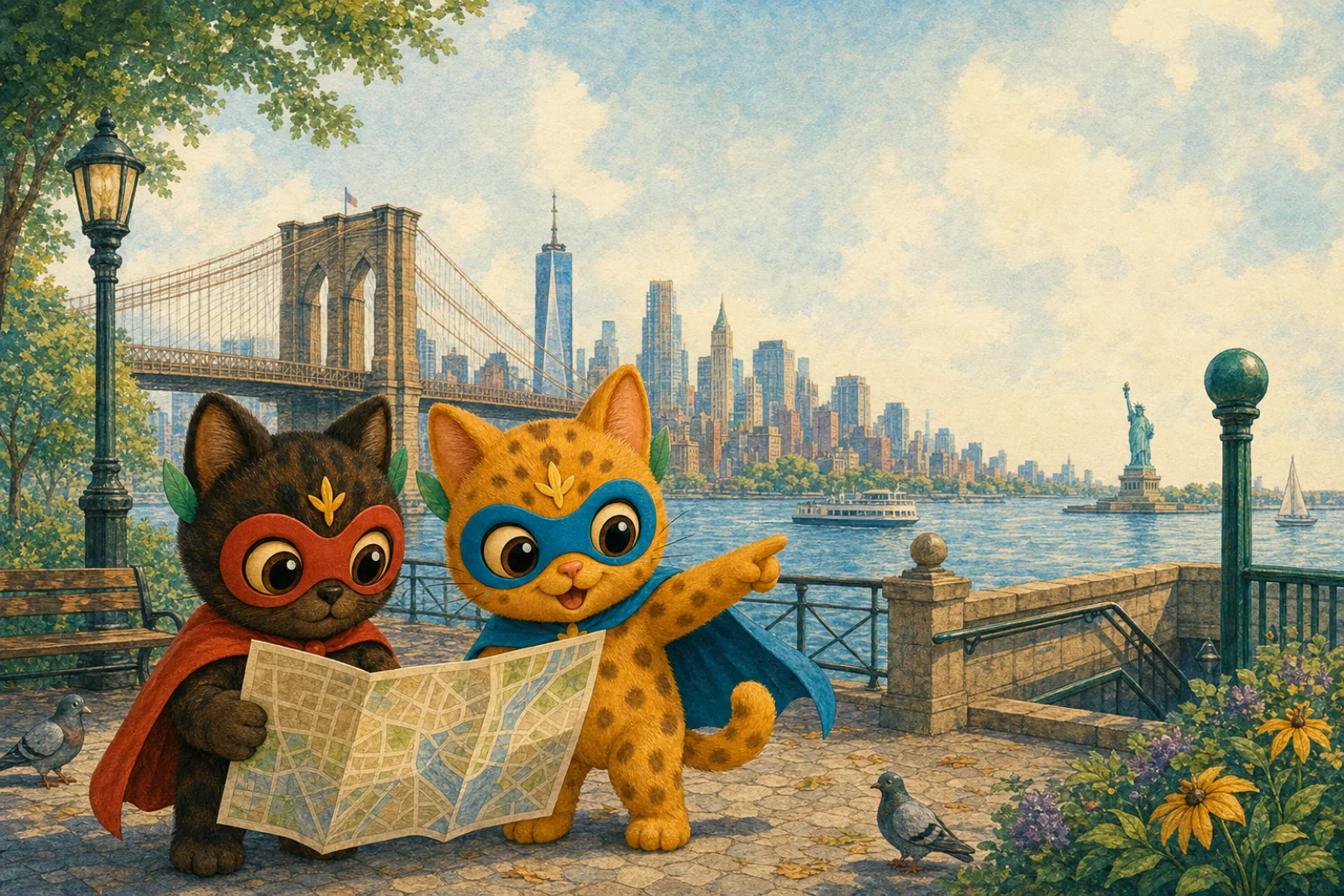
NEW YORK WITH KIDS
Things to Do in New York City with Kids Ages 8–11
Eight New York experiences with observation missions, an interactive map, and realistic one-to-seven-day family itineraries.
Published · 14 minute read
What are the best things to do in New York City with kids ages 8 to 11?
At eight, nine, ten, or eleven, a child can do much more than follow adults through New York. They can read a subway map, study how a bridge carries weight, spot the symbols on the Statue of Liberty, and keep notes on what surprised them.
- 1. New York Transit Museum: Let them decode one subway journey
- 2. Central Park: Turn Central Park into an observation challenge
- 3. Statue of Liberty: Read the Statue of Liberty as a set of symbols
- 4. Brooklyn Bridge Park: Work out how the Brooklyn Bridge holds itself up
- 5. American Museum of Natural History: Give the museum one theme instead of a checklist
- 6. Lower Manhattan streets: Collect the ordinary details that make New York New York
- 7. The High Line: Walk an old railway in the sky
- 8. Grand Central Terminal: Read the stars above Grand Central
Give them one important attraction, time outdoors, and a small mission of their own. That is usually enough for a good day. Five timed reservations rarely are.
New York City family itineraries for one to four days
First New York trip
Major symbols first, then museums and neighborhood detail.
Day 1: Harbor and bridge day
Start with the city from the water, then give the afternoon to Brooklyn. Stops: Statue of Liberty and Brooklyn Bridge Park. This is the most reservation-heavy day. Do not add another major attraction.
Day 2: Park and museum day
Alternate one focused museum visit with a large outdoor landscape. Stops: American Museum of Natural History and Central Park. Choose the museum halls before arrival and keep the park route compact.
Day 3: How New York moves
Connect an old subway station, an elevated railway, and one child-led ride. Stops: New York Transit Museum and The High Line. These stops are far apart. The journey between them is part of the activity.
Day 4: Stars and street details
Use one grand interior and one unstructured neighborhood walk. Stops: Grand Central Terminal and Lower Manhattan streets. A good final day with no timed afternoon reservation.
Less rushing
Begin with flexible days and save the ferry for later.
Day 1: Stars and street details
Use one grand interior and one unstructured neighborhood walk. Stops: Grand Central Terminal and Lower Manhattan streets. A good final day with no timed afternoon reservation.
Day 2: Park and museum day
Alternate one focused museum visit with a large outdoor landscape. Stops: American Museum of Natural History and Central Park. Choose the museum halls before arrival and keep the park route compact.
Day 3: How New York moves
Connect an old subway station, an elevated railway, and one child-led ride. Stops: New York Transit Museum and The High Line. These stops are far apart. The journey between them is part of the activity.
Day 4: Harbor and bridge day
Start with the city from the water, then give the afternoon to Brooklyn. Stops: Statue of Liberty and Brooklyn Bridge Park. This is the most reservation-heavy day. Do not add another major attraction.
Stop 1: New York Transit Museum
Let them decode one subway journey
Choose one simple ride and give your child a real responsibility: find the line color, count the stops, or identify the direction of travel. Keep the adult in charge of safety and transfers, but let the child explain the plan back to the family.
The Transit Museum, inside a decommissioned Brooklyn station, makes a good follow-up. Historic cars show how signs, seats, advertisements, and station design changed as the city grew.
Bobo & Lumen mission: Before boarding, find two pieces of evidence that show which direction the train will travel.
Good to know: Avoid rush hour for the first child-led ride. Check the museum calendar because opening days and timed-entry rules can change.
Stop 2: Central Park
Turn Central Park into an observation challenge
Treat the park as a landscape to investigate. Look for exposed Manhattan schist, compare formal paths with woodland trails, sketch a bridge, or count the different ways New Yorkers use the same patch of grass.
Do not cross the park simply to reach the next museum. Choose one compact area, such as Bethesda Terrace and the Ramble, and give it enough time to feel different from the avenues outside.
Bobo & Lumen mission: Find one place that feels carefully designed and one that feels wild. Name the clues that create each impression.
Good to know: The park is enormous. Pick an entrance that matches the rest of your day and download an offline map before entering wooded areas.
Stop 3: Statue of Liberty
Read the Statue of Liberty as a set of symbols
Start with a problem instead of a date: how would you design a statue large enough to be recognized across a harbor? On the island, look at the tablet, crown, broken chain, stance, and changing viewing angles.
The ferry journey is part of the lesson. Children can compare the skyline from the water, watch harbor traffic, and understand why this entrance to the city mattered long before they reach the pedestal.
Bobo & Lumen mission: Choose the statue detail that carries the strongest message and defend your choice.
Good to know: Use the authorized ferry operator, allow time for security, and expect exposed sun and wind. Crown and pedestal access require separate planning.
Stop 4: Brooklyn Bridge Park
Work out how the Brooklyn Bridge holds itself up
From the waterfront, children can see the stone towers, web of cables, roadway, river traffic, and Manhattan skyline together. Ask them to distinguish parts that pull from parts that carry weight down toward the ground.
The park also gives the family room to recover after a structured visit. Pair one engineering mission with a playground, picnic, carousel, or simply time beside the river.
Bobo & Lumen mission: Trace an imaginary route showing how the weight of one car travels through the bridge toward the ground.
Good to know: The best bridge view and the bridge entrance are not in the same spot. Decide whether the goal is the waterfront, the crossing, or both.
Stop 5: American Museum of Natural History
Give the museum one theme instead of a checklist
Nobody can absorb the entire museum in one visit. Let each person choose one theme before arriving: dinosaurs, ocean life, meteorites, biodiversity, human cultures, or space.
Meet after a set amount of time and let everyone report one object that changed what they thought they knew. A narrow question produces better memories than a march through every floor.
Bobo & Lumen mission: Find one object that changed your mind. What new evidence did it provide?
Good to know: Reserve entry when possible. Choose two or three halls in advance and use Central Park as the outdoor half of the day.
Stop 6: Lower Manhattan streets
Collect the ordinary details that make New York New York
Leave room for things that do not require tickets: fire escapes, water towers, corner shops, chess games, pizza counters, languages on storefronts, and the moment one neighborhood starts to feel like another.
Give every child three field-note prompts: something I noticed, something I wondered, and something I want to remember. Now the walk to the next stop has a purpose.
Bobo & Lumen mission: Nominate one ordinary detail that deserves to become an official New York landmark.
Good to know: Choose a compact walking area and set a clear meeting rule for crowded corners. Chinatown, SoHo, and the Lower East Side reward slow observation.
Stop 7: The High Line
Walk an old railway in the sky
The High Line is two places at once: a former freight railway and a contemporary garden. Look for rails disappearing into planting beds, loading-dock buildings, street views below, and new towers beside older brick structures.
Because the route is linear, children can take responsibility for progress. Let them identify the next exit and decide where the family should leave the park.
Bobo & Lumen mission: Find three clues that prove trains once used this route. Which clue is easiest to miss?
Good to know: There are limited entry and exit points. Check elevator status if step-free access matters and bring shade in hot weather.
Stop 8: Grand Central Terminal
Read the stars above Grand Central
Give children a minute to look up before explaining the zodiac ceiling. Let them find shapes on their own, then compare those shapes with the constellations marked across the deep blue surface.
The information-booth clock and Whispering Gallery add two small investigations without turning the terminal into a long visit. It works especially well when weather interrupts an outdoor plan.
Bobo & Lumen mission: Trace one constellation in the air and see whether another person can locate the same shape.
Good to know: This is a working station. Stand away from commuter paths, keep bags close, and visit outside the busiest weekday periods.
Practical planning tips for families
- Plan one major reservation per half-day.
- Alternate concentrated indoor time with parks, waterfronts, or walking missions.
- Avoid changing boroughs several times in one day.
- Tell children what security lines, long walks, and subway noise may feel like.
- Let each child choose one route, meal, or next stop.
Check current details before you go
Opening hours, reservation rules, accessibility, and temporary closures can change. Use these primary sources when planning:
Explore New York City with the illustrated kids' guide
The guide gives children enough context to understand what they are seeing, then hands them something specific to investigate. It works before the trip, on the street, and again when the family gets home.
See inside the New York City travel guide for kids